Carpentry & Finishing
Our crew is strongest with wood. Whether it's structural framing, custom built-ins, trim, casing or repairs, we build it square, level and to last. Clean joinery you'll want to run your hand across.
Carpentry is the trade this crew is strongest at. We do finish carpentry — trim, casing, baseboards, built-ins and doors — as well as framing and repairs, across Coquitlam, Port Coquitlam, Port Moody, Burnaby and New Westminster. It is the work that decides whether a renovation looks built-in or looks added on.
Wood moves with humidity, and it moves across the grain roughly ten to twenty times more than it moves along it. That single fact explains most of what separates trim that stays tight from trim that opens up at the joints a year later.
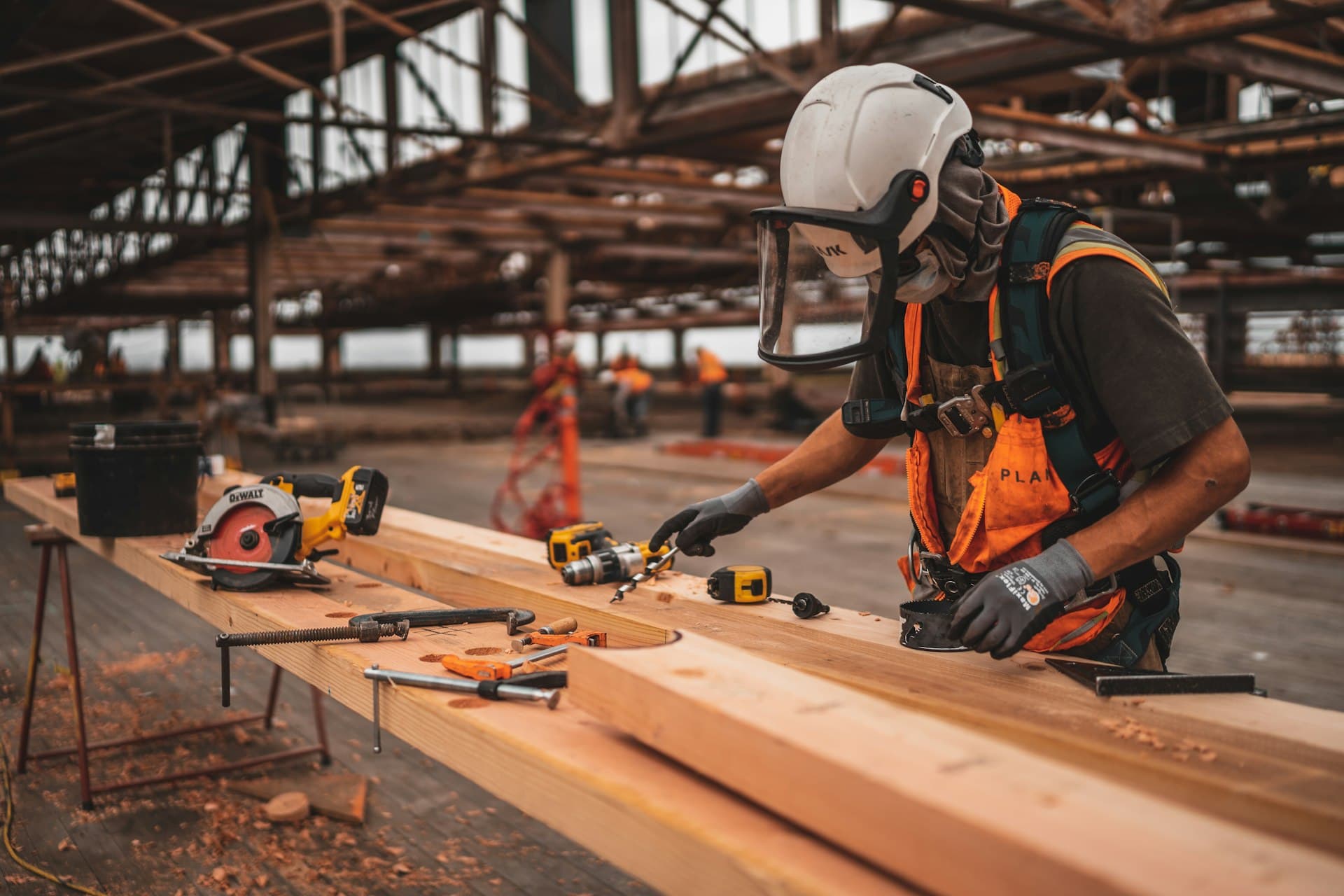
Done properly, start to finish
- Finish carpentry, trim, casing and baseboards
- Custom built-ins, shelving and feature work
- Framing, repairs and structural fixes
- Doors, mouldings and detail work
What makes trim look built-in rather than stuck on
Finish carpentry is judged entirely on the joints, and there are three habits that decide them. Inside corners get coped rather than mitred, because a coped joint follows the profile of the piece it meets and stays closed when the wall moves; a mitred inside corner opens into a visible wedge the first dry winter. New material gets back-primed — sealed on the hidden face before it goes up — so it takes on moisture evenly instead of cupping. And walls get scribed to, rather than assumed flat, because almost no wall is.
None of that is exotic and all of it takes longer. It is also the difference between trim you stop noticing and trim you notice every time you walk past it.
- Cope inside corners instead of mitring them
- Back-prime new material before installation
- Scribe to the wall rather than assuming it is straight
- Fasten into framing, not just into drywall
- Fill, sand and caulk before paint, not instead of a good fit
Matching original mouldings in older homes
Pre-war homes around New Westminster's Queen's Park, Coquitlam's Maillardville and Burnaby's Deer Lake and Heights typically have substantial fir casings, deep baseboards and sometimes picture rails, in profiles that stock mouldings do not reproduce. Putting modern MDF trim next to original fir is the fastest way to make a character interior look cheaply renovated.
The better answer is usually repair rather than replacement. A rotted or damaged section gets cut out and new material is spliced in, shaped to the existing profile, so the run reads as one continuous piece. Where a whole room genuinely needs new trim, matching the profile of what is already in the house keeps the rooms speaking to each other.
Wood movement in a wet climate
The Lower Mainland swings between a very damp winter and a dry late summer, and solid wood tracks that swing. It expands and contracts far more across its width than along its length, which is why a wide baseboard opens a gap at a butt joint while a long run stays put, and why a solid-wood panel that is glued rigidly on all four sides eventually splits.
Working with it rather than against it means letting material acclimatise in the house before it is cut, sealing all faces so moisture moves in and out evenly, and detailing joints so movement is hidden rather than fought. It is also why we are careful about installing interior woodwork in a house that is still drying out after drywall or plaster work.
Framing, structural work and when a permit is needed
We do framing, repairs and structural fixes as well as finish work. What we do not do is treat a structural change as a cosmetic one.
Removing or altering a load-bearing wall, adding or relocating framing, or changing the building envelope is regulated work: municipalities across the Tri-Cities, Burnaby and New Westminster administer the BC Building Code locally, and that kind of project generally needs a building permit and often an engineer's input. Cosmetic carpentry — trim, casing, built-ins, doors, like-for-like replacement — normally does not.
On the quote visit we'll tell you which side of that line your project sits on. If it's the regulated side, that's a conversation with your city before it's a conversation about scheduling.
Carpentry & Finishing across the Tri-Cities, Burnaby & New West
Carpentry & Finishing — questions we get asked
Can you match trim that isn't sold in stores any more?
Usually. The approach on an older home is to save and splice the original wherever it can be saved, and to shape new material to the existing profile where it can't. That keeps the run looking continuous instead of patched. It is slower than buying stock MDF and it is the reason a character room still looks like itself afterwards.
Do I need a permit to take out a wall?
If the wall is load-bearing, or the work moves or adds framing, then generally yes — and often an engineer is involved too. Your municipality administers the BC Building Code and is the authority. Non-structural finish carpentry — trim, casing, built-ins, doors, like-for-like replacement — normally doesn't need one. We'll tell you plainly which one you're looking at rather than guessing.
Can you build custom shelving or built-ins?
Yes — built-ins, shelving and feature work are some of the most satisfying jobs we do, and they're where the difference between finish carpentry and assembly really shows. We build to the space rather than to a flat-pack size, which matters in older homes where nothing is square.
My baseboards have opened up at the joints. Can that be fixed permanently?
Yes, and the fix depends on why. If it's seasonal wood movement, the joint gets recut as a scarf or lap that slides rather than gaps, and the corners get coped. If it's because the trim was fastened into drywall rather than framing, it gets refastened properly. Filling the gap and repainting without addressing either is the version that reopens next winter.
Sources & further reading
Regulations and municipal requirements change. Confirm anything that affects your project with your municipality before work starts.
Tell us about your project.
Fill this out and Rob will get back to you — usually the same day — to set up a free, no-pressure on-site quote. Prefer to talk? Call or text anytime.

Got a project in mind? Let’s take a look.
Tell us what you’re thinking and Rob will come by for a free on-site quote — clear pricing, honest advice, zero pressure.